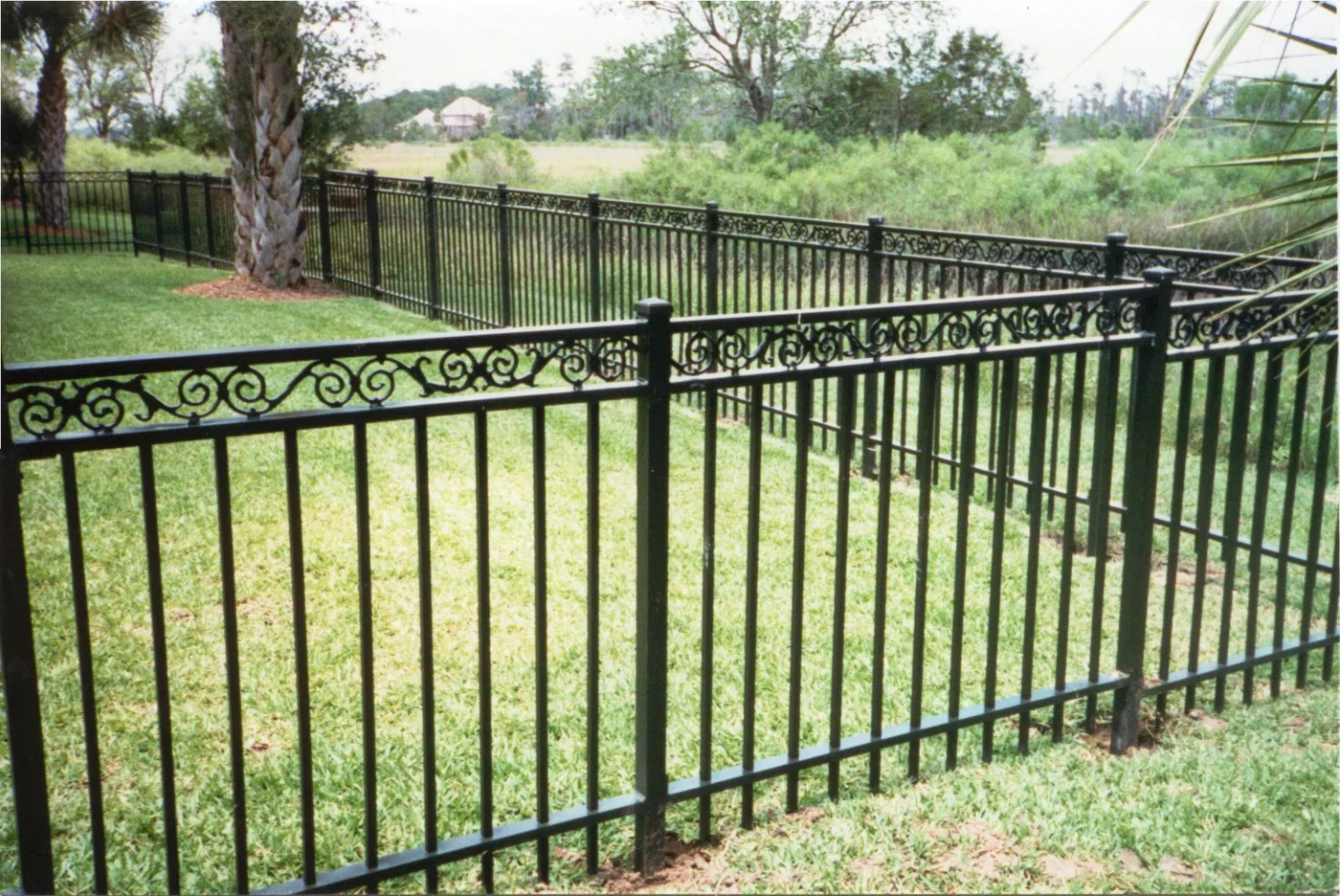
Yes. A fence follows a slope in one of two ways. Racked panels tilt with the ground while the pickets stay upright. Stepped panels stay level and drop at each post like stairs. Racked leaves the smallest gap underneath.
Racked or stepped: which is better?
- Racked: rails run parallel to the ground. Right for gentle and medium slopes, and the best choice with a dog.
- Stepped: every panel is level and the next one sits lower. Used on steep ground and with panels that cannot rack. It leaves a wedge-shaped opening under each panel.
- Built in place: for wood, each picket is cut to the ground line. This gives the tightest fit on uneven ground.
I have a dog that digs and a yard that drops. How do I avoid gaps?
Choose a racked or built-in-place fence and then seal the bottom edge. A treated kick board along the ground works. So do pickets trimmed to the grade, or wire mesh buried a few inches under the fence line. Heavy clay is harder for a dog to dig than sand, but it cracks open in dry weather, so check the bottom in late summer.
My yard is steep and rocky and two companies turned the job down. Who does this?
We look at it before saying yes or no. Most of Montgomery is gentle ground, but rock and steep banks show up at the fall line around Wetumpka and Tallassee, on lake lots near Eclectic, and on creek banks and bluffs along the rivers. When a post lands on rock the hole is cored, or the post spacing is adjusted. That work is slower and costs more than digging in soil.
Do installers dig by hand or with a machine?
Both, depending on the spot. A power auger is quick in open ground. We dig by hand close to a house, near marked utility lines, among tree roots, and in narrow side yards. Wet Black Belt clay sticks to an auger and smears the sides of the hole, so in a rainy week some holes are finished by hand.
A price for your yard takes a visit and a tape measure. The estimate is free. Call (334) 649-8995 or text us a photo of the fence line.