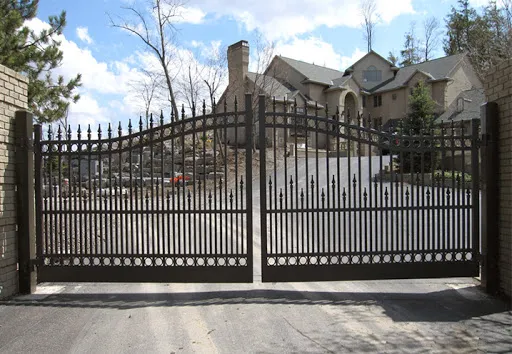
It depends on the address. Montgomery, Prattville, Millbrook, Wetumpka and Pike Road each set their own fence rules, the counties handle land outside city limits, and historic districts and homeowner associations add their own approval. We check the rule for your address before we order material.
Do I need a permit to build or replace a fence?
Ask the office for your address before building. In the City of Montgomery, permits go through the Inspections Department and height and placement come from the zoning ordinance. Prattville is the strictest nearby: its application says a permit is required to construct, repair or replace a fence or any part of one, so even a like-for-like replacement needs one there. Millbrook lists fences in its residential permit process. Rural Elmore County has no zoning or building permit requirement at present, except in a floodplain. Our town pages name the office for each place.
How tall can my fence be? Is 6 feet allowed?
Six feet in a back yard is the normal privacy height across the River Region, and front yards are held lower. The exact limit is set by each city's zoning. Prattville publishes its numbers: 8 feet at most in residential side and rear yards, and 4 feet and not opaque in a front yard. We could not confirm Montgomery's current figures from the city's own text, so we get them from the Inspections Department for your lot. Corner lots usually have a clear area near the intersection.
How close to the property line can I build? Do I need a survey?
Most owners build just inside their own line. If the boundary is not marked, or you and the neighbor do not agree on where the line runs, get a plot plan or a survey before any post is set. That matters more on large rural tracts, where pins are far apart and old fence rows drift. A survey costs much less than moving a finished fence.
I live in a historic district. What can I build?
Get approval first. Montgomery has ten local historic districts, among them Cloverdale, Cloverdale-Idlewild, the Garden District, Capitol Heights, Cottage Hill and Highland Avenue. The city's Architectural Review Board reviews exterior changes and surface improvements to historic properties, and owners apply before work begins. The board decides on material and height case by case, so do not order vinyl or chain link for a street-facing fence until you have its answer. Wood picket and ornamental metal are the traditional choices on these streets and are affordable options to propose. The city's historic preservation office can tell you whether your address is designated.
Can my condo association or HOA restrict my fence?
Yes. Most newer neighborhoods in east Montgomery, Pike Road and Prattville have covenants that set fence style, height, material and stain color, and those rules apply on top of the city's. Send the plan to the architectural committee and wait for written approval before buying material.
We are adding a pool. What fence does code require?
A barrier that meets the building code your city or county has adopted. For private homes in Alabama the rule comes from that local code, enforced by the local inspector. The model pool code asks for a barrier at least 48 inches tall, limits on gaps, and gates that close and latch by themselves. Millbrook has adopted the 2024 International Swimming Pool and Spa Code. We confirm the numbers with your inspections office before we build.
The inspector failed my existing fence for the pool. Who brings it up to code?
A fence contractor. Send us the inspector's written notes and we price exactly those items. The fixes are usually pool-rated self-closing hinges, a latch moved to the required height, gaps closed along the bottom, and low or climbable sections replaced. Clay soil can pull a gate out of line within a season, so we check the gate posts as well.
My association only allows a 4-foot open fence, but I want privacy. What are my options?
Start with what the rules allow. A 4-foot open fence with evergreen planting behind it gives privacy in a few seasons. Some associations treat a short privacy screen beside a patio differently from a boundary fence, so ask. If neither works, request a variance in writing. Also look at your plat for a utility or drainage easement. A fence in an easement may have to be removable, or may not be allowed at all.
Who calls 811 before digging, me or the contractor?
The one doing the digging. Alabama's underground damage prevention law (Code of Alabama, Title 37, Chapter 15) requires anyone who excavates to notify Alabama 811 at least two working days before digging and not more than ten, and the day you call does not count. A locate request stays good for 20 working days. When we build the fence, we place the request. Lines the owner put in, such as sprinkler pipe, landscape lighting or a wire to a shop, are not covered by the utility markings, so show us where those run.
My contractor wants to skip the permit and reuse the old holes. What is the risk?
The risk lands on you, the owner. If your city required a permit or a historic approval and none was obtained, the city can stop the work or order changes, and it can surface again at a sale. Old holes are a second problem: they are often the shallow footings that let the last fence lean.
The city says my existing fence breaks the current rules. Can I just repair it?
Ask the zoning office before spending money. Many places let an older fence be repaired but require a full replacement to meet today's rules. That is the city's call, not the contractor's. Get the answer in writing, then choose between repair and replacement.
A price for your yard takes a visit and a tape measure. The estimate is free. Call (334) 649-8995 or text us a photo of the fence line.